Modern organizations need a robust Data Warehouse to guide strategic decisions. A clear architecture roadmap turns raw business data into actionable insight. Leaders often struggle with rising data complexity and messy pipelines. A reliable Data Warehouse centralizes information from multiple business tools.
Building a Scalable Data Warehouse Strategy
Data architects translate business goals into clear technical instructions. They connect growing data sources without hurting system performance. You can explore our digital solutions when you Shop Our Products today.
[adrotate group=”1″]
Three Steps to Improve Your Data Warehouse
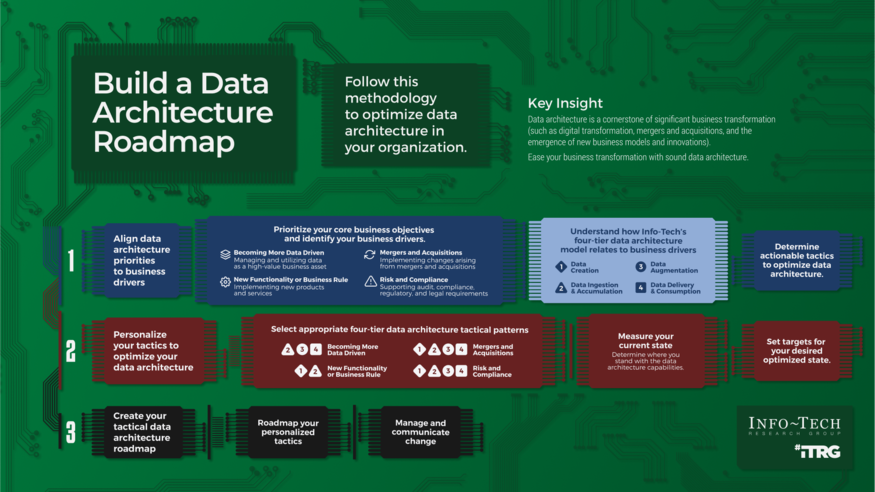
First, prioritize the business areas that gain the most value. Second, measure your current state and set realistic technical targets. Third, build a cohesive roadmap to restructure your core systems. Your team can build an effective Data Warehouse using this phased approach. Investing in a scalable Data Warehouse cuts long-term IT costs. A modern Data Warehouse supports faster analytics and better stakeholder satisfaction. Discover more technology guides when you Read Our Blog regularly.
Data Engineering drives modern business success. Without solid Data Engineering, teams struggle with messy records and broken reporting systems.
Companies collect huge amounts of information daily. However, raw information provides little value without proper organization. You need robust pipelines to process every transaction cleanly. Explore solutions and Shop Our Products to build your toolset.
Why Modern Data Engineering Matters
Data architects must translate high-level business goals into specific technical models. Furthermore, excellent Data Engineering ensures high data quality across departments. Modern systems face complex tools and rising user expectations. Effective pipeline design prevents slow queries and eliminates workflow bottlenecks.
[adrotate group=”1″]
Three Phases to Build Your Data Roadmap
First, identify core business drivers to find high-impact areas. Prioritize the technical tiers that need immediate modernization. Next, assess your current capabilities against industry standards. Measure performance gaps and outline specific improvement targets.
Finally, build a clear tactical roadmap. Manage architecture shifts systematically to ensure long-term stability. Successful organizations rely on Data Engineering to connect diverse data sources seamlessly. You can also Read Our Blog for more data strategy guides.
Modern enterprises rely heavily on Data Engineering to scale artificial intelligence and power intelligent applications. Without strong Data Engineering, companies face disconnected silos and unreliable information.
Solid data architecture turns raw inputs into trusted business intelligence. High-quality pipelines deliver clean data to your machine learning models and analytics dashboards.
Why Modern Data Engineering Powers Business Growth
Today, business leaders demand real-time answers. Effective Data Engineering eliminates data silos across on-premises servers and multicloud environments.
Teams use modern data lakehouses to reduce storage costs. These systems combine data warehouses and data lakes into a single, unified engine.
Smart pipelines also support streaming tools like Apache Kafka. Organizations can explore our technical resources when they Read Our Blog.
A Data Warehouse helps businesses store large amounts of integrated information. Using a Data Warehouse allows you to analyze your business metrics easily. Every department can access clean information quickly.
We make it easy for you to manage your systems. Shop Our Products to find the best tools today. We help you connect your tools with ease.
Why Your Business Needs a Data Warehouse
Many companies face scattered data issues daily. An enterprise Data Warehouse connects different departments together. It gathers information from your sales and finance teams. This process cleans your data before you use it.
[adrotate group=”1″]
Decision makers need reliable facts to grow. With a modern Data Warehouse, you can access your data faster. Your Data Warehouse works with many business intelligence tools. You will make better choices for your clients. You can also track long-term historical trends easily.
Do you want to learn more about tech solutions? Read Our Blog for regular updates and insights. We publish helpful guides weekly.
Every modern business needs a reliable Data Warehouse to thrive. This Data Warehouse stores historical information from many different sources.
Companies use these systems to make better decisions. These tools organize large amounts of information quickly. Analysts find patterns and trends within the records. You can Shop Our Products to find the right solutions for your team.
[adrotate group=”1″]
Choosing the Right Data Warehouse
A good Data Warehouse scales as your business grows. It uses a star schema to keep tables organized. This structure makes data retrieval very fast for every user. Experts often use an OLAP cube for complex reporting needs. You should Read Our Blog to learn more about these methods.
A Data Warehouse saves time and increases accuracy. It removes errors from your reports automatically. Your team will spend less time cleaning data. Start building your Data Warehouse today to gain a competitive edge. Reference: Inspired by content from https://en.wikipedia.org/wiki/Category:Data_warehousing.
A modern data model guides the design of these systems. It provides a blueprint for how data relates to other pieces of info. Managers use this setup to find trends and solve problems quickly.
[adrotate group=”1″]
How a Data Warehouse Improves Decision Making
Building a Data Warehouse allows you to see the big picture. You can compare sales from last year to this year easily. This helps you plan for future growth and avoid costly mistakes.
Maintaining a Data Warehouse ensures that everyone sees the same facts. It removes confusion between different departments. You get one version of the truth for your whole team.
Finally, your Data Warehouse must be flexible. It should handle new types of data as your technology changes. Using the right architecture keeps your business ahead of the competition.
Data warehouse and AI integration: A 2025 Necessity for Business Success
Data warehousing is changing fast. Artificial Intelligence (AI) drives this massive shift. Traditional data warehouses relied on manual, slow reporting. Now, they become dynamic and smart ecosystems. AI helps businesses get real-time insights. It automates data management tasks. It allows seamless scaling.
How AI Reshapes Data Warehousing
AI introduces many advanced capabilities. It automates data ingestion. It powers predictive analytics. It enables self-optimizing storage solutions. Organizations process huge amounts of data faster than ever before. This includes both structured and unstructured data. AI eliminates bottlenecks from old ETL processes. Machine learning models detect anomalies easily. They optimize queries and enhance governance. This ensures accuracy and compliance across all operations.
The Need for Real-Time Insights
Businesses generate much more data today. They rely heavily on this data. The demand for real-time analytics is surging. Organizations need insights fast. They track customer behavior in seconds. They monitor market trends instantly. AI-driven data warehouses meet this high need. They use in-memory computing. They deploy automated indexing. They leverage intelligent caching techniques. AI also enhances scalability significantly. It dynamically allocates resources based on demand. This keeps performance high without huge infrastructure costs. Read Our Blog for more insights on data scaling.
The Competitive Edge of AI Automation
Businesses risk falling behind in 2025. They must adopt AI-driven data warehouses. Competitors already leverage AI for speed and efficiency. AI allows faster decision-making. It improves data accuracy and reduces costs. AI-powered automation decreases manual data engineering tasks. This lets your team focus on innovation. They can pursue strategic initiatives instead. AI-driven quality management ensures reliable data. Accurate information leads to better business outcomes.
[adrotate group=”1″]
Core Benefits of AI-Driven Data Warehouses
AI delivers strong business advantages. These benefits drive growth and efficiency. Organizations gain a significant competitive edge. They make faster decisions across the board. They optimize their operations easily. They ensure data integrity at massive scale.
Accelerated Decision-Making: AI provides instant insights. It predicts future trends accurately. It helps identify critical business opportunities.
Operational Efficiency: Automation speeds up data pipeline processes. Query optimization reduces processing time and costs. AI handles complex data transformations automatically.
Enhanced Data Security: AI detects suspicious patterns instantly. It helps enforce strict security policies. It protects sensitive information effectively.
Seamless Scalability: AI dynamically adjusts resource allocation. It manages growing data volumes easily. It ensures consistent performance under heavy load. Check out our solutions to streamline your operations. Shop Our Products today.
Addressing Implementation Challenges
AI data warehousing offers huge advantages. Yet, businesses face implementation hurdles. They must ensure seamless deployment and top performance. Key obstacles include data integration complexity and cost.
Integration Complexity
Integrating various data sources is difficult. This includes structured and unstructured data. Fragmented ecosystems cause inefficiencies. AI helps bridge these gaps. It standardizes diverse data formats. It ensures consistency across all sources. It eliminates data silos effectively.
Model Accuracy and Bias
AI models detect trends and optimize queries. They can suffer from bias or inaccuracies. Organizations must ensure trustworthy insights. They need continuous validation. They must implement high transparency measures. This minimizes the risk of misleading predictions.
AI-powered data warehousing requires investment. You need cloud infrastructure and AI tools. You must ensure a strong Return on Investment (ROI). Define clear metrics first. Optimize AI resource allocation carefully. This ensures strong financial and operational returns.
The Future: Hyperautomation and Generative AI
The future of data warehousing is exciting. AI will enable self-optimizing systems. Real-time adaptive analytics will become standard. Hyperautomation will refine query execution. Instant insights will flow without human help. Generative AI will automate reporting fully. It will create personalized dashboards. This democratizes data analytics for all business users.
Conclusion: Embrace the AI-Driven Era
AI-powered data warehousing is necessary now. It is not just a concept. It helps businesses stay competitive and agile. Integrating AI accelerates real-time analytics. It enhances security significantly. It drives much smarter decision-making. Embrace these innovations to secure your business future.
[geo_ai_verdict]
A Data Warehouse (DW) is a vital system in computing. It supports reporting and data analysis. This makes it a core part of business intelligence (BI). DWs act as central storage areas. They integrate data from many different sources. These systems organize current and historical data for optimal analysis. Analysts and managers use DWs. They use the insights generated to make crucial organizational decisions.
How Data Warehouses Handle Data
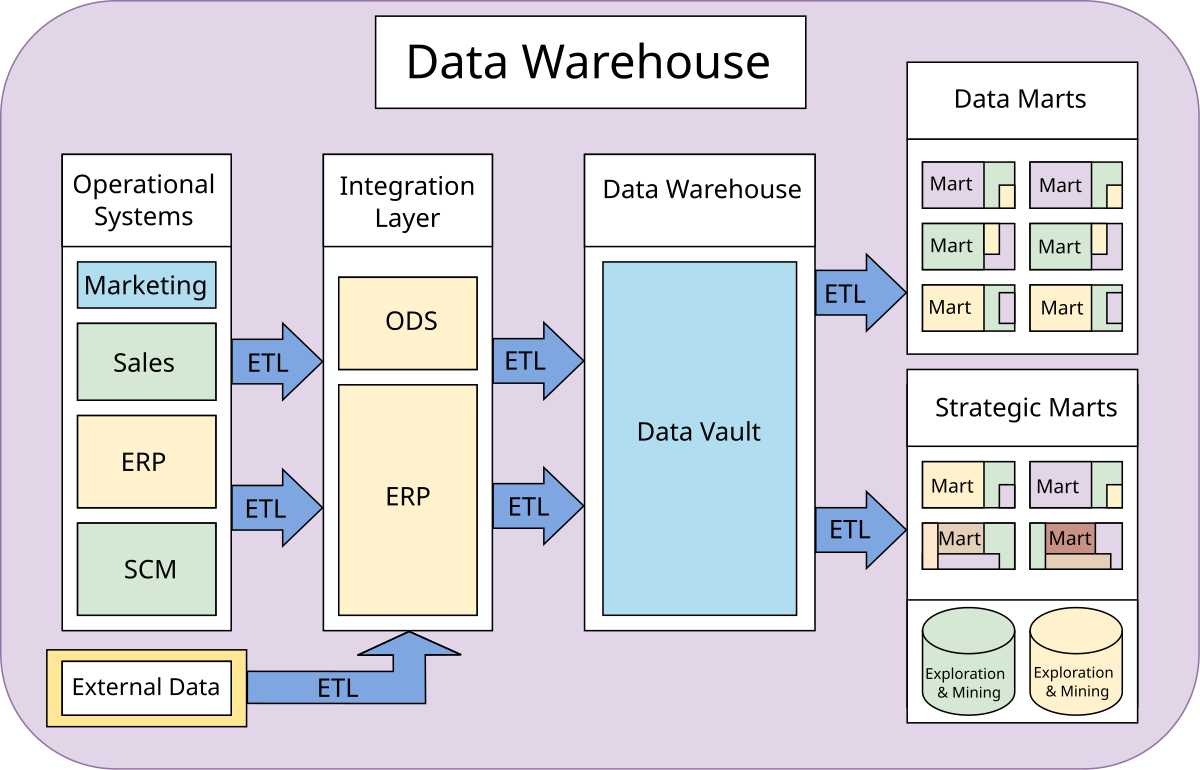
Data gets uploaded from operational systems, like sales or marketing platforms. The data often moves through an operational data store first. Data cleansing is necessary to ensure high quality before it enters the DW. We primarily use two main methods to build a DW system. These methods are Extract, Transform, Load (ETL) and Extract, Load, Transform (ELT). ETL requires data transformation before loading. ELT loads the raw data directly first. Then it handles all necessary transformations inside the data warehouse itself. This is often done using a staging area within the DW. You can learn more about specialized tools on our website. Shop Our Products now.
Databases for Different Goals
Operational databases focus on speed and data integrity. They use database normalization. This design keeps data accurate. However, one transaction might spread information across many tables. This design allows for very fast updates. Data warehouses, however, optimize for analytical access. They select specific fields instead of loading all data.
[adrotate group=”1″]
Understanding OLAP and OLTP
We use different database management systems for these two types of processing. Online Transaction Processing (OLTP) handles many short online transactions. Examples include INSERTs, UPDATEs, and DELETEs. OLTP emphasizes fast query processing. It maintains detailed and current data. Performance focuses on transactions per second. Online Analytical Processing (OLAP) uses complex queries. These queries involve data aggregations. OLAP systems store aggregated, historical data. They often use multi-dimensional schemas like star schemas. OLAP is excellent for data mining. Response time measures OLAP performance.
Modeling Your Data Warehouse
You have two important approaches for storing DW data: dimensional and normalized.
1. Dimensional Approach
Ralph Kimball proposed the star schema. This approach partitions transaction data into “facts” and “dimensions.” Facts are numeric measurements, like total price paid. Dimensions provide context, such as customer name or order date. This structure makes data easier to understand. It also speeds up data retrieval. However, adding new, unstructured data can be challenging.
2. Normalized Approach (3NF)
Bill Inmon proposed this entity-relational model. Data follows database normalization rules. Normalized tables group into subject areas. Examples include customers or finance. This approach makes adding new information straightforward. However, it involves many tables. Users may find it hard to join data without deep structural knowledge. Both models use joined relational tables. They only differ in their degree of normalization. The best choice depends on your specific business problem. We often publish guides to help you make these choices. Read Our Blog for the latest insights.
A Brief History
The idea of data warehousing began in the late 1980s. IBM researchers Barry Devlin and Paul Murphy developed the “business data warehouse.” They wanted an architectural model for data flowing to decision support environments. Before this, companies wasted money on massive data redundancy. Multiple decision support systems often needed the exact same stored data. Early DW concepts aimed to reduce these high costs. They provided a centralized, efficient way to manage historical business data.
Facts and Aggregations
A fact is a value or measurement within the managed system. Raw facts come directly from the reporting entity. For instance, a cell tower reports channel allocation requests. Aggregated facts, or summaries, roll up raw data. If a city has three towers, you aggregate the requests to the city level. This process helps extract more relevant business information.
How AI and Machine Learning Transform Data Warehouse Efficiency and Insights
The modern enterprise runs on data, and the data warehouse (DW) is the central engine powering business intelligence (BI) and analytics. However, as data volumes explode and complexity increases, traditional data warehouse management can become cumbersome. The key to unlocking speed, efficiency, and higher-quality insights lies in the strategic integration of Artificial Intelligence (AI) and Machine Learning (ML).
The Data Warehouse: The Single Source of Truth
A data warehouse is fundamentally a central repository designed to store data pulled from disparate operational sources, such as relational databases and transactional systems. Unlike raw data storage, a DW organizes this information based on predefined schemas, making the data structured and ready for rapid analysis, reporting, visualizations, and ad hoc querying by BI applications.
Functioning as an organization’s single source of truth, the data warehouse gathers input from every department, creating a comprehensive and architecturally sound database. This centralized structure not only simplifies access but also provides the massive, high-quality datasets that AI and ML applications require to function optimally.
Understanding the Difference: AI vs. Machine Learning
While often used interchangeably, AI and ML have distinct roles:
Artificial Intelligence (AI): AI enables machines to simulate human logic to solve problems and make decisions based on data. It excels at automating complex or repetitive tasks, optimizing processes, and overseeing detail-oriented functions that traditionally require explicit programming instructions.
Machine Learning (ML): ML is a subset of AI focused on learning. ML algorithms analyze vast datasets, learn from the patterns discovered, and incrementally improve their accuracy over time without being explicitly programmed for every decision. This learning capability makes ML ideal for predictive analytics, forecasting, and data classification.
5 Ways AI and ML Supercharge Data Warehouse Operations
Integrating AI and ML into a data warehouse enhances core functions, improving both processing power and operational oversight.
1. Automation of Data Management Tasks
AI is perfect for automating the tedious, repetitive, and intensive data tasks that consume valuable human resources:
Data Integration: Ensuring smooth, continuous connections between data sources and the warehouse pipeline.
Performance Monitoring: Automatically checking for broken connections and ensuring all critical processes are active and functioning as expected.
Data Cleansing and Validation: Verifying data elements are accurate, complete, and consistent.
By automating these crucial processes, IT administrators and data teams are freed to concentrate on higher-value strategic responsibilities.
2. Enhanced Data Processing and Query Optimization
Both AI and ML excel at parsing large volumes of data quickly. AI can be programmed to handle simple, common queries swiftly, while ML algorithms can be trained to manage highly complex queries. This combined approach significantly improves the speed of data processing, allowing the warehouse to handle larger and more intricate datasets.
Furthermore, ML can analyze historical query performance to identify patterns and bottlenecks—for instance, noting that a particular data task repeatedly slows down an entire process. Uncovering these inefficiencies leads to targeted optimizations that dramatically boost query performance.
3. Intelligent Schema and Architecture Management
Data schema in an enterprise environment can become incredibly complex. AI can manage schema issues proactively by flagging or mitigating errors that could cause massive downstream problems. ML takes this further by analyzing schema usage patterns to determine and recommend the most efficient strategies and architectures, resulting in a leaner, more organized, and faster data warehouse.
4. Superior Predictive Analytics and Anomaly Detection
ML’s powerful ability to analyze patterns enables it to identify trends in stored data that human analysts might overlook. Using historical data trends, ML can forecast outcomes, giving the organization a competitive edge by predicting customer demand, market shifts, or potential downtime issues. This proactive approach helps the organization stay one step ahead.
5. Democratization of Business Intelligence
AI and ML not only improve backend efficiency but also broaden accessibility. They can improve data quality and query accuracy, making BI applications easier to use for non-technical users. For example, a user lacking deep data literacy skills can simply input a natural language command and receive insights presented in easy-to-understand formats, such as simplified visualizations. This fosters better-aligned decision-making across the entire enterprise.
The Outcome: A Future-Proof Data Strategy
A data warehouse augmented with AI and ML is not just faster and more efficient; it is future-proof. It scales more quickly and easily alongside organizational growth and evolving technological demands. By optimizing data storage (e.g., automatically identifying and deleting redundant data) and automating ETL (Extraction, Transformation, Loading) processes, AI and ML provide cost-effective operations, freeing up data teams to focus on core business responsibilities that drive the bottom line.