Blog

  • Business Intelligence What It Is How It Works and Key

    Business Intelligence What It Is How It Works and Key

    [geo_ai_verdict]


    What is Business Intelligence (BI)?

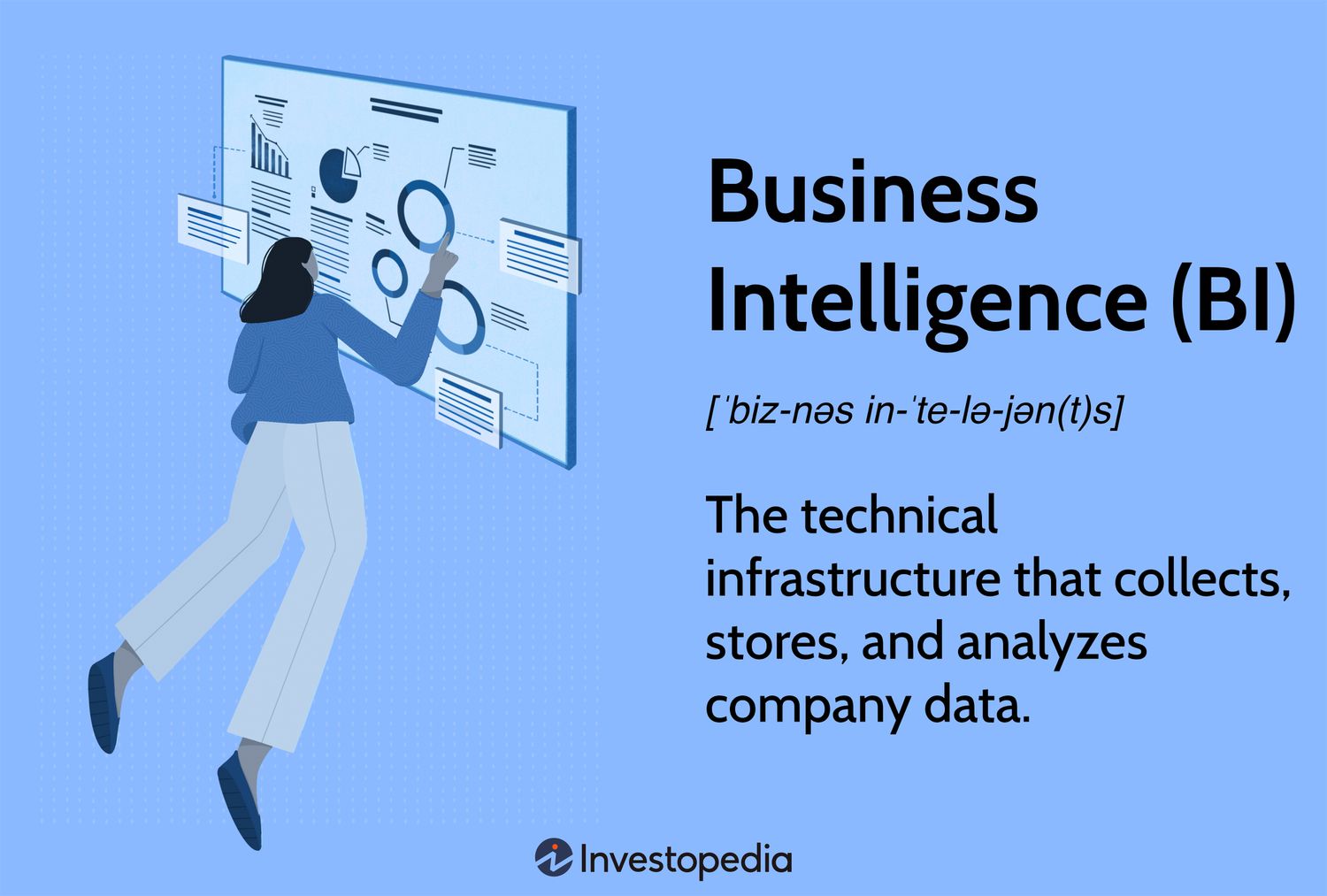
    Business intelligence (BI) uses technology to turn data into insights. This process helps executives make better decisions. They analyze data trends and visualize results easily. Key parts of BI include data mining and performance benchmarking. BI also involves descriptive analytics.

    BI vs. Business Analytics

    People often confuse BI with business analytics. Business analytics looks for predictive insights. It focuses on future growth opportunities. BI supports current economic growth. It helps companies identify trends. It also helps companies optimize operations. Finally, BI helps them find new opportunities.

    The Importance of Good Data

    Managers make poorer decisions with incomplete information. This is why BI is necessary. Financial experts call this “garbage in, garbage out.” Quality information is crucial for good decision-making. BI solves this widespread problem.

    The BI Process

    BI collects, transforms, and analyzes data. Then it displays the data using dashboards and visuals. This aids decision-making. The process usually involves four key steps: collecting data, analyzing data, visualizing data, and then taking action based on the findings. BI tools automate most of this process. Companies make faster and more accurate decisions. They identify trends and uncover inconsistencies quickly. BI provides actionable, real-time insights.

    Benefits of Adopting BI Solutions

    Most companies benefit from using BI solutions. Managers improve their decision quality greatly. Businesses streamline their operations effectively. They improve the customer experience noticeably. BI optimizes sales and marketing efforts. However, BI must increase data accuracy and timeliness. It must also increase the sheer amount of usable data.

    This requires companies to capture new information. They must also check existing information for errors. Companies need to structure the data for broad analysis. Sometimes, data is unstructured or in various formats. This makes analysis difficult. Software firms offer solutions to maximize information from this data. These enterprise applications unify the company’s data and analytics.

    [adrotate group=”1″]

    Data scientists must balance speed with detailed reporting. Big data pushes companies to capture everything. Analysts can filter key data points. They gauge overall business health this way. This saves analytical time significantly. It also increases reporting speed. Demand for BI-skilled professionals is surging. This is a top skill in today’s job market.

    Real-World BI Success Stories

    Companies adopt BI for many functions. These include hiring, compliance, production, and marketing. BI holds core business value. Almost every area benefits from better information.

    Example 1: Coca-Cola Bottling

    Coca-Cola Bottling used slow daily manual reports. This restricted access to real-time data. They implemented an automated BI system. This completely streamlined their process. The company saved 260 hours annually. Now the team analyzes delivery operations instantly. They check budget and profitability with a few clicks.

    Example 2: HelloFresh

    HelloFresh used manual, time-intensive marketing reports. They adopted a centralized BI solution. The marketing team saved 10 to 20 working hours daily. They automated the entire reporting process. HelloFresh created individualized marketing campaigns. This relied on customer behavior data. It led to higher conversion rates. It also improved customer retention.

    We encourage you to explore our advanced solutions. Shop Our Products today!

    Common Types of BI Tools

    Many different BI tools and software exist.

    Power BI

    Microsoft offers Power BI. This is a popular business analytics product. It helps individuals connect, model, and visualize data. It uses a scalable platform.

    IBM Cognos Analytics

    IBM offers Cognos Analytics. The company calls this an AI-powered solution. It is an all-inclusive BI tool.

    Self-Service BI

    Self-service BI allows non-technical users to access and explore data. People outside the IT department gain data control. However, self-service BI has drawbacks. Licensing costs are often high. Users might feel a false sense of security. It sometimes lacks data granularity. It also gives too much accessibility.

    Executives want to make their companies more profitable. They want to improve efficiency. They also aim to enhance the workplace environment. BI offers the technical infrastructure needed. It collects, stores, and analyzes company data. Utilizing tools like reporting software and data visualization helps. These streamline operations and enhance customer experience. Need more insights? Read Our Blog for the latest trends.

    Key Benefits Summary

    Adopting BI brings many benefits. Companies enjoy faster and more accurate analysis. Data quality improves significantly. Costs are often reduced. Revenues usually increase. Employees feel more satisfied. Most importantly, businesses make better strategic decisions.

    Reference: Inspired by content from https://www.investopedia.com/terms/b/business-intelligence-bi.asp.

  • Data Engineering Fundamentals Lifecycle and Best Practices

    [geo_ai_verdict]


    What is Data Engineering?

    In today’s world, businesses deal with massive amounts of data. Data engineering is crucial for handling this information. It connects technology and business strategy. Data engineering turns raw data into useful, actionable insights. Data sources are exploding. They include website interactions, transactions, and sensor readings. Data engineers gather, process, and structure this data. This preparation ensures the data is ready for analysis and smart decision-making.

    Data engineering designs and maintains systems. These systems help businesses gain meaningful insights from operational data. Many people compare data to oil or gold. Data engineering acts as the refinery. It refines raw data into a potent fuel for strategy and innovation.

    The Core Data Engineering Lifecycle

    The data engineering lifecycle defines the stages a data engineer manages. Several core principles overlap all these stages.

    Data Ingestion

    Data ingestion brings data from the source into the processing system. This can follow a push model or a pull model. In the push model, the source writes data to the destination. In the pull model, the destination retrieves the data. Mastering data ingestion ensures smooth data flow. It prepares the data for subsequent analysis stages.

    Data Transformation

    Transformation refines raw data. Operations improve its quality and usefulness. Engineers normalize values to a standard scale. They fill gaps where data is missing. They convert data types. Complex operations also extract specific data features. The goal is to structure data for analytical operations.

    Data Storage

    Data storage is the underlying technology. It holds data throughout the engineering stages. Storage connects diverse, isolated data sources. It merges these fragmented sets. This creates one cohesive, consistent data view. Reliability, availability, and security are the main goals.

    Data Serving

    Data serving makes processed data available. End-users, applications, or downstream processes use this data. Engineers deliver data in an accessible, structured manner. Often they use APIs for delivery. Data serving supports an organization’s analytical and operational needs.

    Why Modern Businesses Need Data Engineering

    Data engineering is essential in almost all modern computing fields.

    Real-Time Analytics: Businesses need immediate insights. Real-time analytics offer valuable information. This drives rapid decision-making. It monitors customer engagement and supply chain efficiency.

    Personalized Customer Experiences: Data engineering helps develop full customer profiles. It gathers data from purchase history and online interactions. This data helps offer more personalized experiences.

    Fraud Detection: Financial and gaming apps use complex algorithms. They detect abnormal and potentially fraudulent activities. Data engineering builds the structures to analyze vast transaction data quickly.

    AI and Machine Learning Success: AI/ML success depends on data quality. Data engineering pipelines feed these algorithms. They ensure models train on high-quality datasets. This guarantees optimal performance. Before you start your next big project, remember to Shop Our Products.

    Best Practices for Data Engineering Success

    Navigating this field requires precision. Low-quality data causes skewed analytics. This results in poor business decisions.

    Prioritize Data Quality and Validation

    Monitoring data quality must be an active, ongoing process. Regularly check datasets for issues. Identify missing or duplicate data swiftly. Implement automated data quality checks during transformation. Tools notify you of discrepancies. This allows for immediate corrections. Frameworks like Apache Beam® or Deequ help perform validation checks. E-commerce platforms, for example, ensure valid email formats.

    Manage Schema Drift

    Schema drift means unexpected changes in data structure. An API update might alter data fields. This disrupts pipelines or causes incorrect analysis. Engineers must manage schema drift carefully. [adrotate group=”1″]

    Comprehensive Documentation

    Data architectures and workflows are complex. Maintaining up-to-date documentation is vital. It reduces onboarding time. It also helps troubleshooting. A well-documented process builds trust among teams. Engineers use platforms like GitHub Wiki. Make documentation a mandatory step in pipeline development. Use tools that automate updates when processes change.

    Enhance Data Security and Lineage

    Engineers prioritize security at every stage. Data is accessible only to authorized users. They follow the principle of least privilege. Data is often encrypted during transit and storage. Understanding a data piece’s origin is critical. Tools like Apache Atlas show data lineage. This is necessary for compliance. You can learn more techniques by following our content. Read Our Blog.

    Version Control and Backup

    Version control tracks changes in data engineering. It allows engineers to revert to previous states. Integrate systems like Git into your workflow. Regularly back up data, transformation logic, and schemas. These best practices increase data reliability and security. They elevate the value data engineering brings to an organization.

    Reference: Inspired by content from https://www.redpanda.com/guides/fundamentals-of-data-engineering.

  • Automated Python Seo Scale Your Workflow with APIs Ga4

    [geo_ai_verdict]


    Master Python for SEO Automation and API Integration

    Start your SEO programming journey today. Python helps you automate difficult tasks. You can quickly turn long weekly reporting into a fast, automated process. You can even run these scripts while away from your computer.

    Have you played with ChatGPT? You can now scale those features. Use the OpenAI API to enhance your SEO workflow. We show you how to put your API key to good use. Recent announcements about Bard and the Bing/OpenAI partnership highlight AI’s importance. Now is the time to automate your work.

    Connecting to Google Analytics 4

    GA4 uses a different API structure than Universal Analytics (GA3). You must have Google API Credentials ready. This enables the Google Analytics Data API (analyticsdata.googleapis.com). You can then programmatically pull valuable reports. We walk you through authorizing your script easily. If you want to dive deeper into our services, you can Shop Our Products here.

    [adrotate group=”2″]

    Why Automation Is Key to SEO Success

    SEO requires finding opportunities quickly. Automation finds challenges fast. Python turns a three-hour weekly report into a 30-second job. You successfully turn daunting tasks into insignificant ones. You need to know what to look for and how to find it. You can find more useful guides when you Read Our Blog.

    Reference: Inspired by content from https://www.shortautomaton.com/author/ericheiken/.

  • Data warehouse and Ai integration Principles and

    [geo_ai_verdict]

    Data Warehouse and AI Integration: Principles and Applications

    Data management is crucial for any modern business. Data Warehousing (DW) provides structured, centralized storage. This supports business intelligence efforts. However, data volumes and complexity are growing fast. Artificial Intelligence (AI) solves these management challenges. AI is now shaping many data processes. This article explores how AI integrates into the Enterprise Data Warehouse. We use AI to boost design and operation. AI also unlocks advanced data science applications.

    Understanding Key AI Terms

    We must first define key terms clearly. AI is now a broad, generic term. It covers techniques where computers imitate human behavior. AI enables learning, decision-making, and problem-solving. Machine Learning (ML) is a core subset of AI. ML uses algorithms to find patterns in large data sets. Machines learn and adapt without explicit programming. ML relies on statistical analysis of input data. It makes accurate inferences or predictions. Deep Learning (DL) is a specialized ML area. DL uses deep neural networks. It processes data in depth to recognize complex patterns. DL simulates the human brain. It uses many layers to extract high-level features. DL excels at tasks like image or voice recognition. Generative AI (GenAI) is a new, popular term. It is a subset of deep learning models. GenAI creates new content like text, images, or code. It generates novel outputs based on its training data. This technology opens up many new possibilities.

    AI Enhances Data Warehouse Operations

    AI changes everything, including DW functionality. It significantly boosts DW efficiency and effectiveness. AI helps in design, structure, and ongoing management. AI addresses major DW challenges. These issues include performance, governance, and usability. This leads to true data intelligence. It revolutionizes how you query and manage data. DW architecture is extremely critical. It needs to support efficient querying and scalability. AI algorithms analyze usage and query patterns. They suggest optimal data models and indexing strategies. This speeds up information retrieval greatly. It also ensures agile data handling during scaling. AI can handle many low-level engineering tasks. Data engineers then focus on higher-level activities. They can design models or create visualizations. For instance, Coca-Cola uses AI-powered ETL tools. They automate data integration across its global supply chain. This optimizes procurement processes.

    AI also supports the development team directly. Developers work faster and more efficiently. They use AI for faster debugging. AI-based code generation tools like GitHub Copilot help. They complete, refactor, and debug code in real-time. Predictive optimizations improve performance tuning automation. This saves significant costs over time.

    [adrotate group=”1″]

    AI can automate and scale data governance. It uses automated tagging and documentation. Natural language search works across all data assets. Business users might soon use natural language entirely. They could interact with data, ask questions, and build dashboards. We are only at the start of these developments. Consider our available tools to help streamline your process. You can Shop Our Products today.

    DW: The Perfect Foundation for AI

    A data warehouse is a structured, centralized repository. It aggregates data from multiple sources. This makes it a perfect base for training AI applications. AI models demand large volumes of data. This data must be well-structured and high quality. A DW provides this foundation perfectly for any organization. For example, a retail DW stores years of data. This includes customer purchases and demographics. AI models use this history for prediction. They predict future buying trends accurately. They also recommend products effectively. Data Vault 2.0 specifically sets ideal training conditions. It provides a reliable, structured data framework. AI integration benefits your analytics greatly. AI improves data storage efficiency. It automates data integration and cleaning tasks. This delivers more timely and accurate insights. AI optimization improves DW performance and scalability. Embracing AI streamlines operations greatly. It empowers businesses to use advanced analytics. You gain deeper insights and foster informed decisions. Visit our site to Read Our Blog for more insights on data strategy.

    Conclusion

    AI is essential for modern data warehousing success. It drives efficiency and enables powerful predictions. Organizations must integrate AI fully. This unlocks the true power of their enterprise data.

    Reference: Inspired by content from https://www.scalefree.com/blog/data-warehouse/ai-in-data-warehousing-principles-and-applications/.

  • Data Warehouse Definition Architecture Benefits Best

    [geo_ai_verdict]

    Data Warehouse: Complete Definition and Guide

    A data warehouse (DW) is a central data repository. It collects data from operational systems and various other sources. This resource supports powerful analytics applications. These applications help drive crucial business decisions. Data warehousing is key to any robust data management strategy.

    What is a Data Warehouse?

    DWs process and organize stored data for analysis. Business analysts, executives, and data scientists use this information. Typically, a DW is a relational or columnar database. It lives in the cloud or an on-premises data center. Data comes from online transaction processing (OLTP) applications. It also comes from internal and external sources. The data is consolidated for business intelligence (BI). BI uses include querying, decision support, and reporting. Users access this data through BI software and analytics tools.

    Understanding DW Architecture

    A fundamental DW architecture contains three tiers. It includes a data integration layer. Tools in this layer extract and combine data from operational systems. A staging area cleanses and transforms this data. It organizes the data before loading it into the warehouse. Data quality software handles tasks at this staging level. An enterprise data warehouse (EDW) stores analytical data for all operations. Alternatively, large companies may use separate data warehouses. DWs also connect to data marts. Data marts are smaller systems. They hold data subsets for specific users or departments.

    Design Approaches: Inmon vs. Kimball

    Organizations follow two main implementation paths. These are the top-down and bottom-up methods.

    1. The Top-Down Method (Inmon)

    William H. Inmon pioneered this approach. It calls for building the EDW first. You then use this centralized data to set up data marts. Data is validated in a staging area. It integrates into a normalized data model. This prepares it for planned BI and analytics uses.

    2. The Bottom-Up Method (Kimball)

    Ralph Kimball developed this alternative. This approach creates dimensional data marts first. Data models use a star schema design. Fact tables connect to one or more dimensional tables. Data marts can populate an EDW or integrate with each other. A hybrid approach combines aspects of both methods. Federated data warehouses integrate separate analytical systems.

    Benefits of Data Warehousing

    DWs offer business and IT advantages. They enable faster, more efficient data access. They have the compute resources for running complicated queries. Businesses derive quick insights and value from their data. Companies use DWs for enterprise reporting and strategic decision-making. Shop Our Products related to data solutions to maximize your efficiency.

    [adrotate group=”1″]

    Data Warehouse Best Practices

    Adopt these practices for better design and management.

    Understand Business Goals

    First, understand the goals driving the need for a DW. The DW holds structured data ready for analysis. IT leaders must involve business stakeholders. Their objectives shape decisions about data sources and formatting.

    Review Data Governance and Security

    Review your data governance program. Update your overall data management strategy as needed. Ensure source systems feed clean, accurate, and consistent data. Define user permissions and access controls upfront. Address broader data security and compliance requirements early.

    Select the Right Architecture

    Business requirements determine the best technology. Ask key questions: Do you need an on-premises or cloud DW? Should you use ETL or ELT methods? Will you deploy the platform yourself or use a managed service?

    Optimize and Maximize Value

    New practices help optimize management and value. Data observability maintains data health in pipelines. Applying Agile methodologies delivers value faster and lowers risk. Self-service BI capabilities also speed up value delivery. You can Read Our Blog for more insights on optimization!

    Data Warehouse vs. Data Lake

    Both systems support analytics, but they differ greatly. A DW stores processed, structured data. It uses predefined schemas for BI applications. A data lake is a repository for all types of raw data. This includes structured, unstructured, or semi-structured data. Data lakes commonly use big data platforms like Hadoop. They support advanced analytics like machine learning. DWs also differ from operational databases. An operational database collects data from a single system for ongoing processes. The DW consolidates and cleans this data for analysis.

    A Brief History

    IBM researchers Barry Devlin and Paul Murphy started the concept. They coined the term in their 1988 paper. Bill Inmon published his book in 1992, promoting the top-down design. Ralph Kimball introduced the bottom-up approach in 1996. Organizations widely adopted DW technology throughout the 2000s.

    Reference: Inspired by content from https://www.techtarget.com/searchdatamanagement/definition/data-warehouse.

  • Business Intelligence Ultimate Guide to Bi Software Tools

    [geo_ai_verdict]


    The Essential Guide to Business Intelligence (BI) Software

    Business Intelligence (BI) software collects and analyzes large amounts of data. It pulls information from various sources. This software lets users access current and historical data. Users track performance trends easily. They make informed business decisions based on this data. BI solutions vary greatly. Some are simple reporting tools. Others are comprehensive analytics suites. These advanced tools provide forecasting capabilities.

    BI software helps businesses make better choices. It collects, stores, analyzes, and presents crucial data. Companies gain deep insight into operations and processes. They identify improvement opportunities and maximize profitability. BI uses data from internal systems like CRM and ERP. It also uses external sources such as news outlets.

    Key Components of BI Software

    BI software has four main parts. These are data extraction, integration, analysis, and reporting.

    • Data Extraction: This step gathers information. It pulls data from inside and outside the organization. Automated systems, like web crawlers or APIs, usually handle this process.
    • Data Integration: Organizations combine multiple data sets here. This creates one unified view. They analyze the data across different dimensions easily.
    • Data Analysis: This applies various techniques. It uses machine learning or statistical analysis. This generates meaningful insights for the business.
    • Reporting Tools: These provide graphical results to users. Users easily interpret the findings.

    Businesses use BI software for many applications. This includes market research and customer targeting. It supports ad hoc queries for key decisions. It also monitors sales trends. BI offers actionable insights about customer behavior. This helps companies make smarter decisions. They enhance productivity while reducing irrelevant costs. Shop Our Products to find tools that support data-driven strategy.

    BI vs. Business Analytics (BA): Understanding the Difference

    We call Business Intelligence descriptive analysis. It describes the current or past state of the business. BI states what is occurring. It does not tell the business what specific actions to take. Business Analytics (BA) is different. Technology assists the BA process. Software analyzes data to predict future outcomes. BA is often called advanced analytics.

    Essential Business Intelligence Software Features

    Effective BI tools offer specific features:

    • Dashboards: They display Key Performance Indicators (KPIs). Users see profits and sales in an easy-to-read format. Executives gain instant insights into the organization’s current state.
    • Analytics: BI offers tools like predictive analytics and data mining. Users collect, organize, and interpret data. This informs strategic decision-making.
    • Reporting: This feature generates detailed reports. Reports track customer demographics or financial performance. You can customize reports to meet specific needs.
    • Data Visualization: Applications display data visually. They use graphs, charts, tables, and heat maps. Users spot complex patterns quickly. They identify areas needing improvement.
    • Collaboration Tools: BI solutions help teams share information quickly. They use chat functions or virtual whiteboards. This facilitates teamwork on complex datasets.
    [adrotate group=”1″]

    Common Types of BI Software

    Organizations use many specialized BI tools:

    • Business Intelligence (BI) Software: This general tool helps organizations analyze data. It helps them make better business decisions.
    • Data Mining Tools: These extract patterns from large databases. They uncover meaningful correlations and market trends.
    • Dashboards: They give real-time insights into key performance indicators (KPIs). Users monitor organizational performance easily.
    • Visualization Software: This creates visual data representations. It uses charts and diagrams. This helps users quickly understand complex data.
    • Forecasting Applications: These use historical data algorithms. They predict potential future outcomes and trends. Organizations plan ahead and adjust strategies accordingly.
    • Self-service BI: This tool features an intuitive interface. Non-technical users can quickly explore large amounts of data. It provides timely insights with minimal effort.

    Who Uses BI Software?

    Many roles rely on Business Intelligence:

    • Financial Analysts: They access financial data. They analyze trends and project future growth.
    • Operational Managers: They monitor sales and inventory data. They make informed decisions about operations.
    • Marketers: They analyze consumer behavior and campaign results. They maximize marketing efforts.
    • Data Scientists: They use BI for data gathering, analysis, and visualization. They uncover deep insights and trends.
    • Business Executives: They gain a comprehensive overview of performance. They make top-level informed decisions.

    BI provides more than simple reports. It helps businesses derive insights. They understand current trends by examining data closely. Data helps individuals perform their jobs better. BI tools streamline these efforts. If a person needs to merge and query data, BI improves their decision-making. Read Our Blog for more details on leveraging data for success.

    For example, consider supply chain management. BI figures out exactly where delays occur. It examines all variables within the shipping process. A company uses BI to find which products are most delayed. It identifies the type of transportation responsible for the issue.

    Reference: Inspired by content from https://sourceforge.net/software/business-intelligence/.

  • Data Engineering Role Skills and How Data Powers Decisions

    [geo_ai_verdict]


    Data Engineering: Building the Infrastructure for Insight

    Data engineering is essential today. Data engineers take raw data. They transform it. Then they store it in useful formats. This process ensures data is ready for use cases. Consider the fuel industry analogy. Workers extract crude oil from a well. They refine it into products like diesel or jet fuel. They monitor and automate this entire process. Data engineering works the same way. The subject is data instead of oil. A data engineer’s goal is simple. They make data accessible to many customers. Customers then make informed, data-driven decisions. This optimizes their organization’s performance.

    What Does a Data Engineer Do?

    Data engineers interact with raw data first. They funnel it through the entire organization. Data scientists and analysts use this processed data. They design and develop data products. These products must be robust and scalable. They must also be performant and cost-effective. The role demands logical thinking and thoroughness. Flexibility and strong problem-solving skills are also vital.

    The Essential Skills for Data Engineering

    Engineers traditionally came from IT or science fields. Modern training now opens this path to anyone. You need enthusiasm and logical thinking. Strong communication skills are vital for success. You must work well within a team structure. A willingness to learn new technologies is also key. Data engineers build many custom solutions. If you need tools to manage your data projects, you can always Shop Our Products.

    Data Products and Customer Impact

    Data products vary widely based on customer needs. A product might be a data pipeline or a simple API. Customers are people who need data access. Examples include operational teams or policy staff. The provided data informs their decision-making. For instance, APIs allow real-time checks for prescription eligibility. Data engineers support vulnerable citizens indirectly. They improve people’s lives through better services.

    Why Data Drives Modern Decisions

    Data drives better decision-making today. Relying on intuition alone is no longer effective. Refined data becomes valuable information. This information helps increase income or reduce costs. Social media companies monetize user habits using harvested data. The sports industry uses data to boost performance. Manufacturing uses data to prevent problems proactively. The prime objective is supporting better decisions.

    [adrotate group=”1″]

    Career Path and Future Outlook

    Cloud computing removes old technological limits. Technologies like Machine Learning (ML) and AI grow quickly. Data engineering moves beyond looking at the past. We now focus on predicting the future. This ultimately leads to prescriptive analytics. Prescriptive analytics recommends the best course of action. This makes data engineering an exciting field. This career is rewarding yet often challenging. Data engineers take software engineering to a new level. They constantly use the latest technologies. Data engineers and data scientists are highly sought-after roles. They often receive high salaries. You build expertise through experience and constant learning.

    Stages in a Data Engineering Career

    • Early Career: They manage smaller datasets. They maintain existing pipelines. They write basic ETL/ELT scripts.
    • Mid-Career: They develop scalable data architectures. They optimize performance across complex systems. They mentor junior team members.

    These skills allow smooth transitions to other roles. Examples include software engineering or data science. A data engineer provisions data correctly. They ensure the right format and time for every use case. This data supports techniques like machine learning and deep learning. Want to explore more topics in IT and tech innovation? Read Our Blog for the latest insights.

    The Scale of Data Handling

    Organizations handle massive amounts of data daily. For example, every UK citizen interaction generates data. This includes interactions with services like Universal Credit. These events help us understand citizen journeys. We track access times and note problems encountered. We process about 18 million events daily. Billions of events sit in our databases. The technology changes constantly. However, core principles of governance remain the same.

    Common Technologies and Tools

    Teams select technology based on specific needs. Best practices guide data governance and storage. Approved tools often include Python and SQL. Teams utilize Apache Kafka for streaming data. Cloud platforms (AWS, Azure, GCP) are standard. Data lakes and warehouses like Snowflake are also common.

    Reference: Inspired by content from https://careers.dwp.gov.uk/our-teams/dwp-digital-data-science/what-is-data-engineering/.

  • Automated Python Seo Master Semantic Optimization with Nlp

    Automated Python Seo Master Semantic Optimization with Nlp

    [geo_ai_verdict]


    Automated Python SEO: Master Semantic Optimization with NLP

    Python drives modern Natural Language Processing (NLP). It is the top language for semantic search optimization. Python offers simplicity and strong library support. This makes it perfect for analyzing content relevance. We combine Python with semantic SEO principles. This helps you align content with user intent. You stop relying only on keyword density. For instance, do not just repeat “best running shoes.” Python NLP identifies related topics instead. It finds entities like “cushioning” or “foot arch support.” This ensures comprehensive topic coverage.

    Modern search algorithms interpret meaning this way. Python fits easily into existing SEO workflows. Marketers and developers use its adaptability. Analyze competitor content using Python. Identify semantic gaps quickly. Generate structured data efficiently. Python lets you automate and scale these tasks. You can focus more on strategy and creativity. Data-driven insights guide all your optimization efforts.

    Understanding NLP and Semantic SEO

    NLP is a core field of artificial intelligence (AI). It helps computers understand human language. In SEO, NLP assesses content quality and context. It helps marketers optimize pages for semantic relevance. NLP analyzes linguistic features like entities and sentiment. Google’s BERT and MUM algorithms heavily use NLP. They interpret user intent much more accurately. SEO professionals must understand these ranking signals.

    Semantic SEO focuses on meaning and context. It moves beyond simple keywords. This approach aligns your content with user intent. Applying semantic principles improves topical authority. It reduces ambiguity for search engines. This enhances visibility across related search queries. A post about “renewable energy” must mention key entities. These include “solar power” and “wind turbines.” This interconnectedness signals topic expertise to search engines. If you need powerful tools, remember to Shop Our Products.

    Python’s Powerful Toolkit for SEO Automation

    Python offers a strong toolkit for automation. It scales semantic SEO efforts easily. Python processes huge amounts of text quickly. It extracts valuable insights instantly. It identifies critical optimization opportunities. Integrating NLP models moves you past basic keyword analysis. You understand the deeper meaning of queries and content. Python connects multiple data sources easily. It interoperates with APIs and databases. Think of Google Search Console or analytics tools. This connectivity is perfect for data merging.

    Several libraries automate this process. spaCy offers speed and scalability. Transformers give advanced contextual understanding. They use models like BERT for deep analysis. Combining these tools ensures both efficiency and depth.

    Applying the Python NLP Workflow

    Applying NLP to SEO involves clear steps. Python automates the entire process. This provides deeper insights into content alignment. The typical workflow includes gathering data and cleaning it. Then comes feature extraction and evaluation.

    1. Data Collection

    Gather textual data from several sources. Look at your own pages and competitor sites. Use search engine results pages (SERPs). Python libraries like requests and BeautifulSoup scrape text. For massive projects, use commercial APIs. These include SerpAPI or Google Custom Search. They provide structured SERP data efficiently.

    2. Text Preprocessing

    Clean and prepare the text properly. Remove stopwords and unnecessary punctuation. Tokenization and lemmatization are essential steps. These normalize words to their base forms. For example, “running” becomes “run.” This process improves analytical accuracy.

    [adrotate group=”2″]

    3. Entity Recognition and Analysis

    Use libraries like spaCy or NLTK next. Identify named entities and key phrases easily. This determines the most prominent concepts. It verifies alignment with your target topic. Compare extracted entities against a knowledge graph. This ensures comprehensive coverage of relevant topics.

    4. Intent Classification and Sentiment

    Apply sentiment analysis to gauge content tone. Ensure the tone matches user expectations. Intent models classify queries into types. They find informational, navigational, or transactional intent. Better content targeting results from this step. An informational query needs a tutorial, not a sales pitch.

    Advanced Optimization and Strategy

    Topic modeling identifies content gaps. Use techniques like Latent Dirichlet Allocation (LDA). Libraries like Gensim and scikit-learn help here. This groups related terms successfully. It supports creating strong topic clusters. This enhances semantic depth and internal linking. If you want more strategies, Read Our Blog for expert insights.

    Calculate semantic similarity between content pieces. Use vector embeddings for this analysis. This reveals overlap and redundancy quickly. Advanced models like BERT measure context-aware scores. Use these scores to prioritize page merges or expansions.

    Automating On-Page SEO

    Python optimizes specific on-page elements. It analyzes headings and meta descriptions. NLP models verify element accuracy. They ensure alignment with the main topic and entities. Automated scripts flag missing semantic signals. Check for unlinked entities or inconsistent terminology. A script can confirm H2 headings include relevant entities. It verifies meta descriptions match page intent.

    Building Robust Topic Clusters

    Creating topic clusters strengthens topical authority. Python groups keywords and pages effectively. It bases these groupings on semantic similarity. Related content supports the main pillar page perfectly. This improves crawlability for search engines. It helps them understand content relationships. A site about “digital marketing” needs clusters. Examples include “SEO” and “content marketing.”

    The Future Role of Python in SEO

    NLP integration evolves rapidly. Search engines increasingly use machine learning. They interpret meaning and user intent better. Semantic optimization will soon rely less on manual keywords. It will rely more on entity relationships and contextual depth. Future SEO tools may offer automated semantic suggestions. Python maintains a central role in this shift. It enables scalable, data-driven optimization methods. We will soon see real-time semantic scoring. Automated content generation guided by intent is coming. Python powers adaptive SEO strategies through continuous NLP feedback. Even small businesses can leverage semantic SEO at scale. Python empowers professionals to create powerful, meaningful content.

    Python bridges technical SEO and linguistic intelligence. It uses automation and semantic clustering. Embrace these methods for stronger authority. You gain improved search visibility. You achieve better alignment with user intent. This combination marks a new era of optimization.

    Reference: Inspired by content from https://fuelyourdigital.com/post/how-to-use-python-for-nlp-and-semantic-seo/.

  • Data warehouse and Ai integration The Future of Data

    Data warehouse and Ai integration The Future of Data

    [geo_ai_verdict]

    Data warehouse and AI integration: Revolutionizing Business Intelligence

    Enterprises need clear data insights. But messy reality often gets in the way. Fragmented systems cause problems. Poor data quality creates pain points. Manual processes slow down trustable insights. Data volumes keep exploding. Traditional data warehousing struggles to keep pace. Artificial Intelligence (AI) provides the solution.

    AI is now a major driving force. It creates smarter, faster, and more automated decision-making. A recent Forbes Advisor survey showed 64% of businesses expect AI to significantly boost productivity. The global AI market will reach $1.81 trillion by 2030. Its massive impact is undeniable. Realizing this impact requires overcoming challenges. This change is clearest in data warehousing. AI in Data Warehousing reshapes how organizations manage data. It helps them get full value from their assets.

    The Evolution of Data Warehousing

    Data warehousing first appeared in the late 1980s. It served as a centralized place. It stored integrated data for reporting and analysis. Over time, data warehouses grew more sophisticated. They enhanced data aggregation and retrieval. Big data and cloud computing arrived. This made data warehousing more scalable and flexible. Today, a data warehouse is an intelligent system. It handles predictive analytics and real-time analysis. It provides immediate, actionable insights. This marks a new chapter in data evolution. You can learn more about how we build robust infrastructure when you Read Our Blog.

    AI’s Core Components: ML and NLP

    AI integration brings a major shift. Data warehouses move from passive storage to intelligent platforms. They automate workflows and improve data quality. They power advanced analytics instantly. Two AI innovations drive this transformation: Machine Learning (ML) and Natural Language Processing (NLP).

    Machine Learning Drives Prediction

    ML algorithms integrate into modern platforms. They create predictive models. These models enhance data analysis quickly. Algorithms identify patterns and anomalies in huge datasets. Humans cannot detect these things manually. For example, ML forecasts future trends. It uses historical data stored in the warehouse. Businesses make proactive decisions using this capability. They anticipate market changes and personalize customer experiences. AI automates data governance tasks too. These tasks include quality checks and anomaly detection. This ensures accurate and reliable raw data.

    NLP Democratizes Data Access

    NLP improves data accessibility greatly. It lets users query data using plain language. This democratizes analytics across all departments. Business users generate insights without needing SQL expertise. NLP also extracts insights from unstructured data. Sources include emails and customer feedback. This adds a new layer of analysis to the data warehouse.

    [adrotate group=”1″]

    Architectural Strategy: OLAP vs. OLTP

    Organizations must understand where to apply AI. A subtle but vital distinction exists. This involves OLAP and OLTP systems. OLAP (Online Analytical Processing) focuses on strategic intelligence. It predicts trends and surfaces anomalies. AI here enhances business decision-making through analysis. These systems use large volumes of historical data. They support sales forecasting and compliance analysis.

    OLTP (Online Transaction Processing) systems use AI for real-time operational responses. Examples include CRM platforms or payment gateways. AI supports instant fraud detection here. It also handles transaction risk scoring. Low latency is critical in these systems. Organizational leaders must recognize this difference. AI-enhanced data warehouses improve long-term planning. AI in OLTP systems provides customer-facing agility. Applying AI correctly shapes strategy and resource allocation.

    How AI Enhances Data Warehousing Processes

    AI streamlines traditionally complex data tasks. It ensures better data quality and faster insights.

    1. Automated Data Integration (ETL)

    AI simplifies aggregating data from many sources. These include databases, cloud platforms, and IoT devices. AI automates ELT pipelines. This accelerates data ingestion. It reduces the need for manual intervention. AI helps standardize formatting. It detects inconsistencies and suggests transformations. This improves efficiency greatly. Near real-time data becomes available for agile decision-making.

    2. Improving Data Quality and Governance

    Maintaining clean data remains a large challenge. AI detects errors automatically. It performs deduplication and intelligent classification. It flags inconsistencies in real-time. It applies corrections without manual effort. AI also supports strict compliance. It tags sensitive data automatically. It enforces access controls. This helps organizations meet privacy rules like GDPR or HIPAA more efficiently. If your organization needs cutting-edge solutions for data governance, be sure to Shop Our Products.

    3. Observability and Metadata Management

    AI is crucial for operational reliability. Tools like Monte Carlo monitor data pipelines. They detect upstream failures quickly. They identify anomalies before these issues hit dashboards. This prevents broken reports. Other platforms leverage AI for metadata management. This includes mapping data lineage and cataloging data. It ensures transparency and compliance in complex systems. Organizations reduce manual oversight by embedding AI here. They maintain trust in their analytics.

    Advanced Analytics and Ecosystems

    AI enhances traditional analytics effectively. It uncovers trends humans might miss. ML models project future outcomes based on history. This enables demand forecasting and customer behavior prediction. Business teams shift from reactive reporting to proactive strategy. The quality of insights depends on sound data science. AI delivers value when grounded in good practices.

    Leading data platforms embed these AI capabilities directly. Snowflake offers Snowpark ML for model development. BigQuery ML allows SQL-based machine learning. Azure Synapse supports NLP models at scale. These ecosystems allow businesses to implement AI quickly. They avoid building new infrastructure from scratch. They harness the full power of predictive modeling.

    Conclusion

    A major retailer used AI in its data warehouse. They optimized inventory management. The AI system predicted product demand based on sales data and weather. This led to efficient stock replenishment. It reduced overstocking significantly. AI in Data Warehousing drives the next evolution of data management. It ensures businesses can leverage their data effectively for innovation and competitive advantage.

    Reference: Inspired by content from https://data-sleek.com/blog/ai-in-data-warehousing/.

  • Data Warehouse Scaling Analytics with DuckDB and MotherDuck

    Data Warehouse Scaling Analytics with DuckDB and MotherDuck

    [geo_ai_verdict]


    Data Warehouse: Revolutionizing Business Analytics

    AI agents often struggle with business data accuracy. You need a reliable source for your insights. Is your business data spread everywhere? You must bring it all together. Centralizing your data is crucial for internal business intelligence. This process helps you start making sense of your operations. Read Our Blog for more insights on data strategy.

    The Challenge of Traditional Analytics

    Many organizations end up with big data problems. They struggle with slow, brittle data pipelines. Traditional BI tools often fall short. They do not handle the volume and speed needed today. This complexity forces organizations into heavy data engineering work.

    Introducing Fast, Columnar Storage

    You need fast, centralized data storage. The ideal solution is optimized for complex analytics. DuckDB offers a database you will not hate. It scales vertically and horizontally. This handles spikey workloads effectively. DuckDB reads all your data types. This includes plaintext, JSON, Parquet, and CSV files.

    MotherDuck: Cloud Scaling for DuckDB

    MotherDuck provides a cloud data warehouse solution. It allows you to run locally and deploy to the cloud. This ensures reliability and collaboration. It fits perfectly into your existing workflow. You can build pure SQL pipelines easily. You can also share data and collaborate quickly with your team.

    [adrotate group=”1″]

    Understanding Customer-Facing Analytics (CFA)

    CFA differs greatly from traditional BI. It builds directly into your product. End users get insights immediately. CFA demands near real-time, low-latency performance. Think milliseconds, not minutes. It must also handle thousands of concurrent queries. MotherDuck’s architecture meets these unique CFA requirements.

    How MotherDuck Scales Analytics

    MotherDuck uses a per-user tenancy model. It employs a vertical scaling strategy. Users connect to their own dedicated DuckDB instances. These instances are called Ducklings. MotherDuck sizes these Ducklings to meet specific user needs. Available sizes include Pulse, Standard, Jumbo, Mega, and Giga. Pulse is perfect for quick ad-hoc analytics. Jumbo handles larger workloads with many transformations. Giga instances run the toughest transformations quickly.

    Flexible Resources and Read Scaling

    Each Duckling connects to the central Data Warehouse storage. MotherDuck also offers read scaling capabilities. Users connect via a BI Tool to dedicated read replicas. These read replicas are also provisioned in various sizes. This design allows efficient handling of read operations. It ensures flexible resource allocation. You can easily Shop Our Products designed for data integration.

    Conclusion

    MotherDuck provides modern, scalable analytics. It handles complex data needs easily. It drives increased user engagement directly in your application. Start transforming your business intelligence today.

    Reference: Inspired by content from https://motherduck.com/.