

🤖 AI Expert Verdict
Business Intelligence (BI) is a technology-driven process that converts raw business data into actionable insights. It helps managers and executives make better-informed decisions by analyzing trends, optimizing operations, and identifying new market opportunities through tools like dashboards, data mining, and performance benchmarking.
- Faster and more accurate reporting and analysis
- Improved data quality reduces errors in decision making
- Streamlines operations and optimizes sales efforts
- Reduces costs and increases revenues
What is Business Intelligence (BI)?
Business intelligence (BI) uses technology to turn data into insights. This process helps executives make better decisions. They analyze data trends and visualize results easily. Key parts of BI include data mining and performance benchmarking. BI also involves descriptive analytics.
BI vs. Business Analytics
People often confuse BI with business analytics. Business analytics looks for predictive insights. It focuses on future growth opportunities. BI supports current economic growth. It helps companies identify trends. It also helps companies optimize operations. Finally, BI helps them find new opportunities.
The Importance of Good Data
Managers make poorer decisions with incomplete information. This is why BI is necessary. Financial experts call this “garbage in, garbage out.” Quality information is crucial for good decision-making. BI solves this widespread problem.
The BI Process
BI collects, transforms, and analyzes data. Then it displays the data using dashboards and visuals. This aids decision-making. The process usually involves four key steps: collecting data, analyzing data, visualizing data, and then taking action based on the findings. BI tools automate most of this process. Companies make faster and more accurate decisions. They identify trends and uncover inconsistencies quickly. BI provides actionable, real-time insights.
Benefits of Adopting BI Solutions
Most companies benefit from using BI solutions. Managers improve their decision quality greatly. Businesses streamline their operations effectively. They improve the customer experience noticeably. BI optimizes sales and marketing efforts. However, BI must increase data accuracy and timeliness. It must also increase the sheer amount of usable data.
This requires companies to capture new information. They must also check existing information for errors. Companies need to structure the data for broad analysis. Sometimes, data is unstructured or in various formats. This makes analysis difficult. Software firms offer solutions to maximize information from this data. These enterprise applications unify the company’s data and analytics.
[adrotate group=”1″]Data scientists must balance speed with detailed reporting. Big data pushes companies to capture everything. Analysts can filter key data points. They gauge overall business health this way. This saves analytical time significantly. It also increases reporting speed. Demand for BI-skilled professionals is surging. This is a top skill in today’s job market.
Real-World BI Success Stories
Companies adopt BI for many functions. These include hiring, compliance, production, and marketing. BI holds core business value. Almost every area benefits from better information.
Example 1: Coca-Cola Bottling
Coca-Cola Bottling used slow daily manual reports. This restricted access to real-time data. They implemented an automated BI system. This completely streamlined their process. The company saved 260 hours annually. Now the team analyzes delivery operations instantly. They check budget and profitability with a few clicks.
Example 2: HelloFresh
HelloFresh used manual, time-intensive marketing reports. They adopted a centralized BI solution. The marketing team saved 10 to 20 working hours daily. They automated the entire reporting process. HelloFresh created individualized marketing campaigns. This relied on customer behavior data. It led to higher conversion rates. It also improved customer retention.
We encourage you to explore our advanced solutions. Shop Our Products today!
Common Types of BI Tools
Many different BI tools and software exist.
Power BI
Microsoft offers Power BI. This is a popular business analytics product. It helps individuals connect, model, and visualize data. It uses a scalable platform.
IBM Cognos Analytics
IBM offers Cognos Analytics. The company calls this an AI-powered solution. It is an all-inclusive BI tool.
Self-Service BI
Self-service BI allows non-technical users to access and explore data. People outside the IT department gain data control. However, self-service BI has drawbacks. Licensing costs are often high. Users might feel a false sense of security. It sometimes lacks data granularity. It also gives too much accessibility.
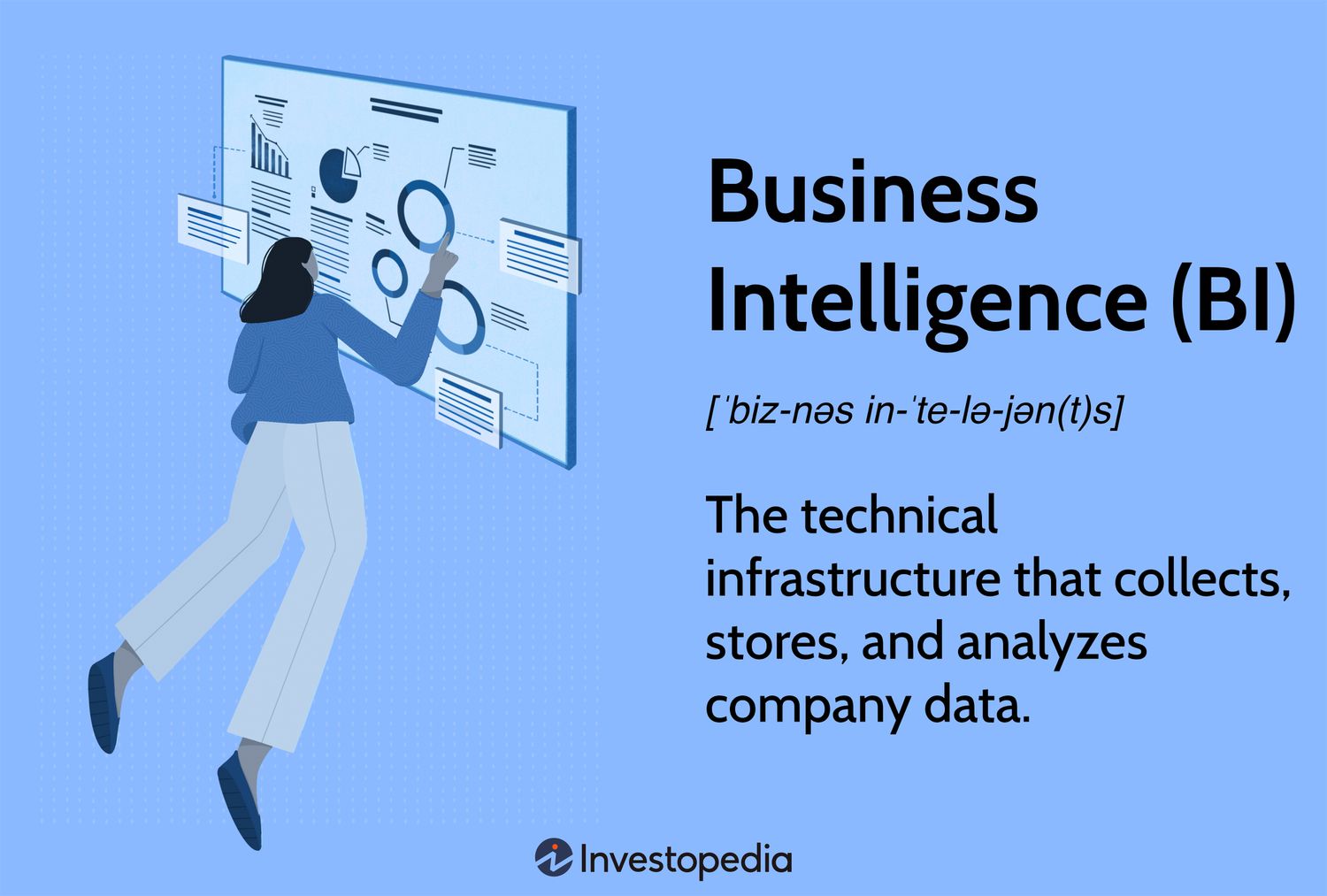
Executives want to make their companies more profitable. They want to improve efficiency. They also aim to enhance the workplace environment. BI offers the technical infrastructure needed. It collects, stores, and analyzes company data. Utilizing tools like reporting software and data visualization helps. These streamline operations and enhance customer experience. Need more insights? Read Our Blog for the latest trends.
Key Benefits Summary
Adopting BI brings many benefits. Companies enjoy faster and more accurate analysis. Data quality improves significantly. Costs are often reduced. Revenues usually increase. Employees feel more satisfied. Most importantly, businesses make better strategic decisions.
Reference: Inspired by content from https://www.investopedia.com/terms/b/business-intelligence-bi.asp.